


If you've been trying to break into data analytics lately, you already know something feels off. The job postings are there, but the callbacks aren't coming, and the "entry-level" roles keep asking for a good deal of experience.
You're not imagining it.
The data industry has a beginner problem, and it existed before AI came along to make it even more complicated. A combination of exploding candidate supply, shrinking junior headcount in organizations, and rapidly shifting employer expectations has created a market where getting your first role is genuinely harder than it was a decade ago. Understanding why is the first step to doing something about it.
There are several reasons why it’s harder to land an entry-level data job now than it was a decade ago.
Very few analyst roles required coding before 2015. Actually, Python is now the de facto language if you’re programming in analytics, but at the time, you saw a lot more SPSS/STATA or other point-and-click tools for working with data.
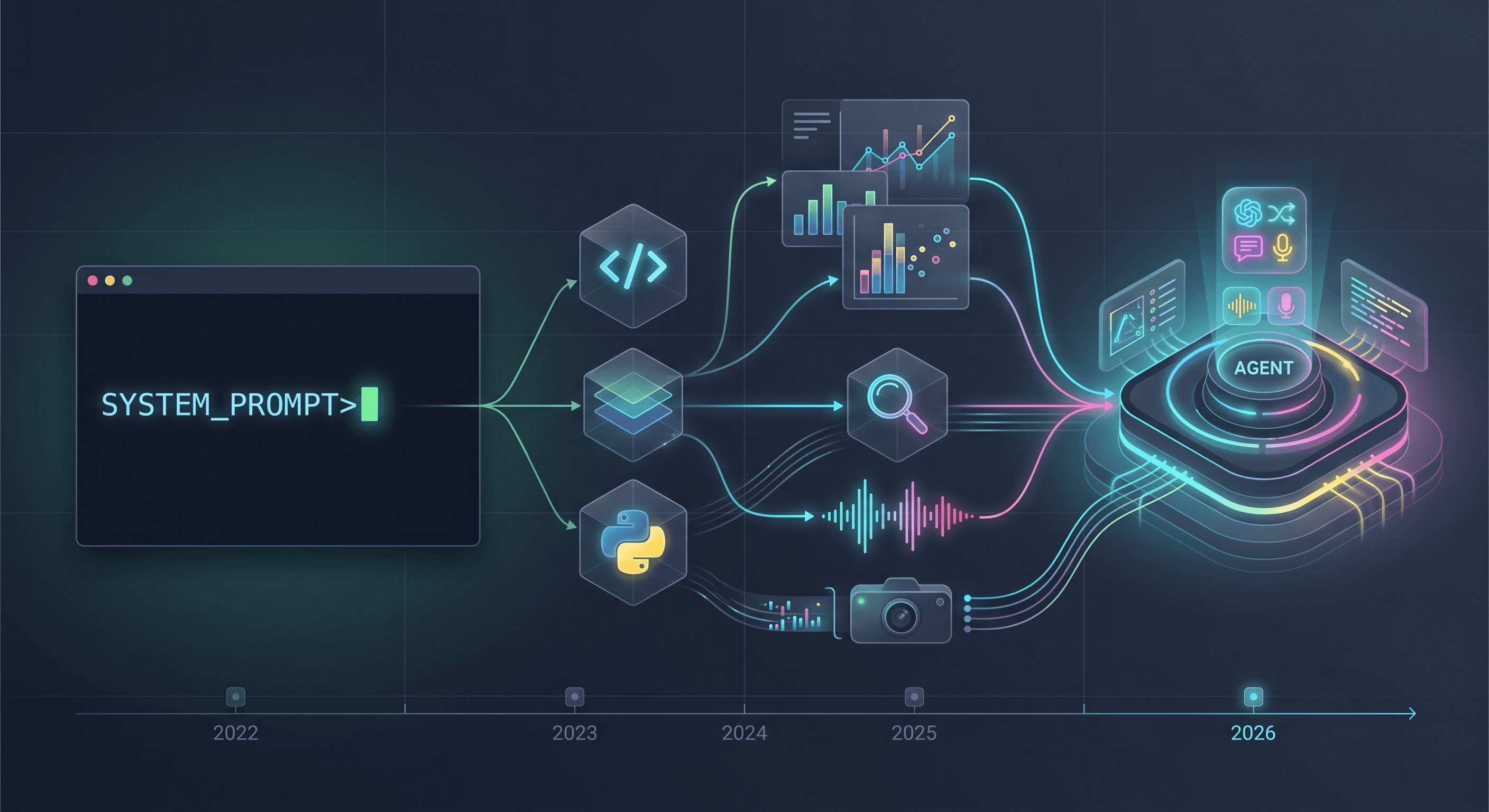
With the explosion of data degrees and the mainstream popularity of people rushing into analytics careers, it was already becoming more competitive, even before LLMs came on the scene. AI tools have raised employer expectations, and lean teams need analysts who can contribute immediately. Companies now expect practical project experience, business judgment, and AI fluency, even at the entry level.
The Promise of Data Careers Drew Millions In
A decade ago, the narrative was simple: learn SQL, maybe some Python, get certified in Tableau, and land a high-paying data job.
Before 2016, dedicated data analyst/data scientist degrees did not exist. People who found themselves in analytics often came from a math, stats, economics, computer science, or similar background, and they likely weren’t setting out to be an “analyst” when they were getting their degree in the first place.
Then, bootcamps multiplied. Online courses in data have exploded. Universities launched data analytics programs rapidly. The demand narrative was real, McKinsey was publishing reports about a global shortage of data talent, and tech companies were hiring aggressively. "Data scientist" was named the sexiest job of the 21st century by Harvard Business Review, and it stayed that way for years.
Millions of people entered the field, career changers, recent graduates, professionals from adjacent industries who saw an opportunity. They put in the work. They earned the certificates. They built the portfolios.
But Entry-Level Roles Are Shrinking
The data job market didn't collapse. But it compressed, and it compressed at exactly the level where most newcomers are trying to enter.
Several things happened at once:
AI automation changed what junior analysts do.
Tasks that used to require a full-time hire — cleaning data, writing standard reports, building basic dashboards — can now be partially or fully automated.
Companies that once hired two analysts for those tasks might now hire one.
Or reassign the work to a senior analyst with better tools, because it can be done more quickly now.
Teams got leaner.
Post-2022 tech layoffs changed hiring philosophy across the industry. Many organizations moved from "hire ahead of need" to "hire when it hurts." Junior roles, which historically required more onboarding investment, were the first to get cut and the last to come back. When a senior analyst leaves, the company needs to backfill with a senior candidate who can ramp up more quickly.
Job descriptions became disconnected from reality.
The "entry-level" label started appearing on roles requiring three to five years of experience, proficiency in five tools, and the ability to "work cross-functionally with stakeholders at all levels." These aren't entry-level roles. They're mid-level roles with entry-level salaries, posted by companies hoping the saturated market would deliver an overqualified candidate willing to accept less.
The candidate pool got larger as the opening pool shrank.
Every bootcamp cohort produces dozens of job seekers. Every university data program graduates another class. The ratio of candidates to open roles at the junior level has shifted dramatically.
Here's the nuance worth holding onto: AI isn't killing the data industry. It's changing what the industry expects from the people who enter it. The ceiling hasn't lowered, but the floor has risen, and that's where beginners are standing.
The Real Skill Gap Isn’t Technical
Here's what nobody tells you when you're staring at a SQL course progress bar: the skills that get people hired are increasingly not the ones that are easiest to teach.
Technical skills are table stakes. Many of the candidates applying for that role have learned the technical skills, they’ve likely put together a portfolio, and they’ve read up on interviewing for analyst roles. The candidates who get callbacks are the ones who can do something harder.
Problem framing.
Can you look at a vague business question and show that you understand how the business thinks about information? "Sales are down" is not an analytical problem. "Sales are down 18% in the northeast region among customers acquired in Q3. Let's understand whether that's a pricing issue, a retention issue, or a product issue", is one. That translation is a skill, and most courses don't teach it.
Communication.
Knowing what the data says is half the job. Knowing how to tell a non-technical audience what it means and what to do about it is the other half. Can you write a clear executive summary that targets what a product owner cares about, in their language? Can you present a finding without drowning the audience in methodology?
Ambiguity tolerance.
Real data work is messy. Stakeholders might ask for data that won’t give them the whole picture they’re looking for; it’s our job to work with them to focus on the actual problem, rather than individual data elements. Data is often missing; this might lead to bias, or maybe there is a more complete proxy candidate. Perfectly scoped requirements often don’t exist, and hiring managers are looking for candidates who understand what working with real data looks like.
Business context.
Analysis without business judgment produces technically correct answers to the wrong questions. Employers want analysts who understand why the business cares about certain metrics, not just how to calculate them.
The foundations — SQL, statistics, visualization — still matter enormously. But judgment is what separates candidates in 2026, and judgment is harder to fake and harder to teach. The good news is that it's also harder to automate.
AI Raises the Floor, Not the Ceiling
This is the most important thing to understand about how AI is reshaping data careers: it makes the baseline easier and the differentiation harder.
AI can generate a SQL query. It can suggest a visualization type. It can summarize a dataset, flag anomalies, and draft a findings memo. For a beginner who spent six months learning these things, that's disorienting. You need to know it, but it might not feel that way when AI can easily answer those questions.
There's a meaningful difference between generating SQL and knowing which analysis matters. AI is also often wrong. You become a reviewer of AI-generated output, it doesn’t go to stakeholders unchecked.
AI also doesn't know your business. It doesn't know which metric the CFO actually cares about, or why last quarter's retention number is being watched closely, or that the data in that particular table has a known quality issue that will skew the result if you don't account for it. AI doesn't know what question to ask.
The analysts who will thrive are the ones who use AI to move faster on execution and spend the time they save on the things AI can't do — framing, judgment, communication, and synthesis. And because you’ve already learned the skills, you’ll be able to fix that SQL query when AI gives you something that doesn’t run.
The floor has risen. You no longer get credit for knowing how to write a basic query. But the ceiling, the value a genuinely skilled analyst brings to a business, hasn't changed. If anything, it's higher, because the analysts who can think clearly alongside AI tools are more productive than any analyst who came before them.
What Beginners Should Focus On Instead
If you're trying to break into data analytics right now, here's the honest roadmap.
SQL first, always.
It remains the most important foundational skill in the field and the one most frequently tested in interviews. On day one of a new analyst role, your boss will tell you where the data is, and it’ll be in a database.
Data storytelling over dashboard building.
Anyone can build a dashboard. Fewer people can take a dataset and construct a narrative that leads a decision-maker to a clear action. Practice translating findings into plain language. Practice presenting to people who don't care about your methodology.
Portfolio projects that solve real problems.
The weakest portfolios are full of tutorial recreations. The strongest ones show a candidate who found a question they were genuinely curious about, got messy data, made judgment calls, and communicated what they found along with their assumptions.
Your portfolio needs to show how you think, that you use good judgement, and that you can think deeply about the problem. Bonus points if they’re use cases that demonstrate you can solve relevant business problems (customer lifetime value, retention, etc).
Data is more available now than ever before. You can also have AI create a synthetic dataset and specifically ask it for something where you’ll be able to demonstrate these skills.
AI fluency as a tool, not a crutch.
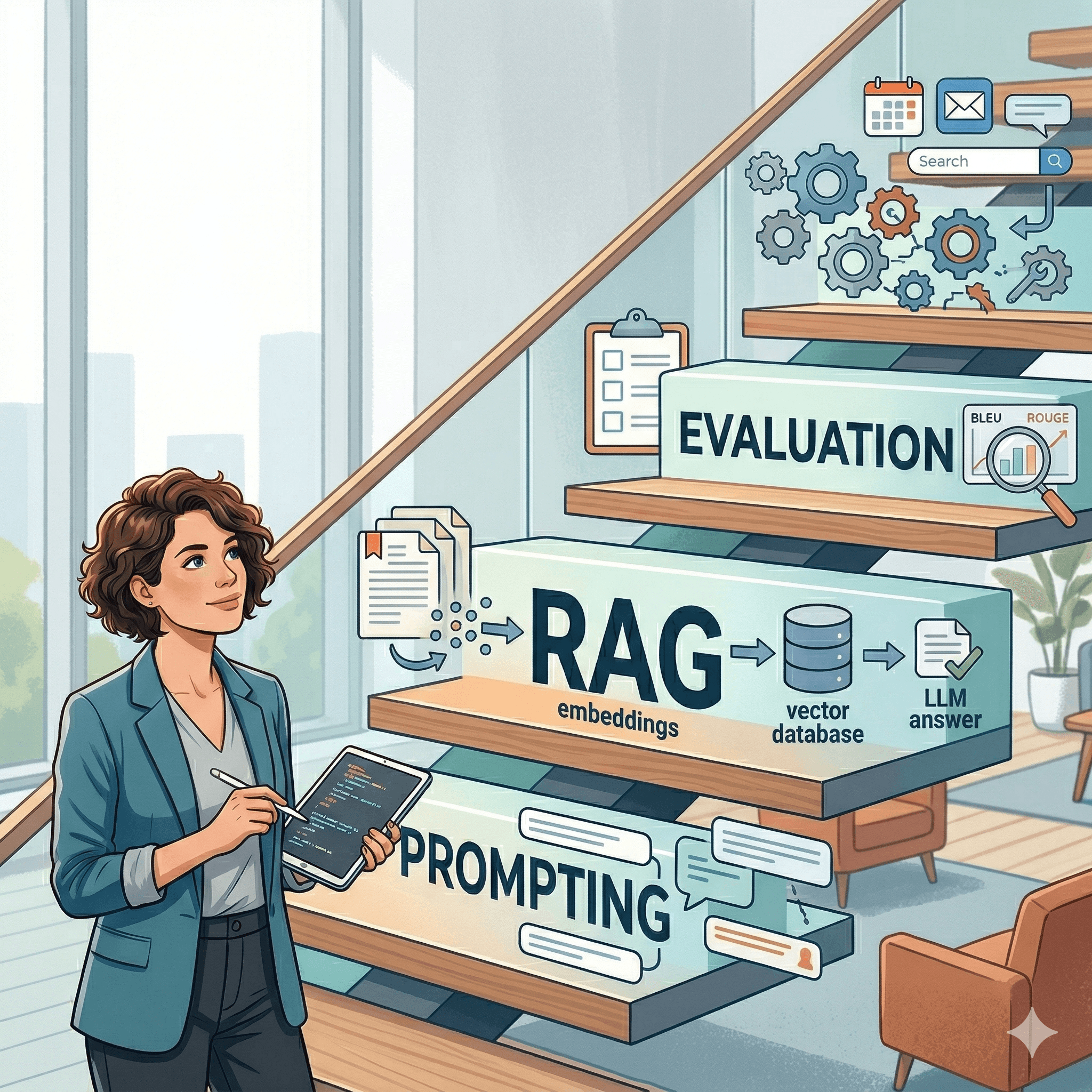
Learn how to use AI tools effectively in your workflow. Drafting queries, exploring datasets, checking logic, speeding up documentation. But understand what they're doing and where they break down, especially since it’s not always correct. Understand each claim that is made and how it was derived. Employers can tell the difference between a candidate who uses AI thoughtfully and one who can't function without it.
Communication skills make the biggest difference.
It’s how you communicate your skills and position yourself as the analyst they need on their team. Write about your projects. Explain your findings out loud. Get feedback from people outside the field. The ability to communicate clearly across technical and non-technical audiences is one of the highest-value skills in the market and one of the most underdeveloped among new analysts. This will help you in your interviews and on the job.
The Industry Needs Better On-Ramps
The beginner problem in data isn't just a supply and demand issue. Most data education is optimized for getting someone to the point of technical competence. Very little of it bridges the gap between "I can do the technical thing" and "I understand how to apply the technical thing in a business context." Businesses have also focused so much on keeping teams lean that they've put themselves in a difficult position to manage turnover.
Apprenticeships and structured junior roles are how other skilled trades have always handled this gap. Data doesn't seem to have a good equivalent. Until it does, you have to create the conditions yourself.
That means seeking out mentorship actively, not waiting for it to be offered. You’ll want to reach out to someone you know for mentorship, rather than cold-messaging people you don’t.
It means finding projects with real stakes, even small ones, rather than completing another tutorial. It doesn't have to be paid work; even a project that solves a real problem in your own life counts. A project you sound passionate about lands well in interviews.
You’ll also want to use AI tools to accelerate genuine understanding rather than skip the hard parts. And it means getting comfortable with ambiguous problems now, before an employer hands you one.
The structural gap is real. But the candidates who close it themselves are more likely to get hired.
Conclusion
The data job market is harder to break into than it was five years ago. That's true and worth saying clearly.
But harder isn't the same as closed.
The candidates who will succeed are the ones who treat the changed landscape as information rather than discouragement. The bar has moved. Technical execution is assumed. Judgment, communication, and the ability to work alongside AI tools are what differentiate people now.
The opportunity for adaptable learners is real and in some ways bigger than before, because the analysts who develop genuine business judgment alongside technical and AI skills will be more valuable to organizations than any previous generation of entry-level hires.


Kristen Kehrer
Data Science & AI Expert
I love building coding demos and educating others around topics in AI and machine learning. This past year I've leveraged computer vision to build things like a school bus detector that I use during the school year to get my kids on the bus. I've most recently been playing with semantic video search, vector databases, and building simple chatbots using OpenAI and LangChain.
Frequently Asked Questions
Is data analytics still a good career in 2026?
Yes, but the skills employers expect are changing quickly as AI becomes embedded in the workflow. Technical skills have become a given. Analysts who bring business judgment, communication, and AI fluency alongside SQL and visualization skills are better positioned for strong career growth.
Will AI replace junior data analysts?
AI will automate some of what junior analysts have historically done, including routine reporting, basic queries, and standard dashboards. But analysts who can frame problems, interpret results in a business context, and communicate findings clearly will remain valuable. AI is changing the job in a meaningful way, but it isn’t eliminating junior analysts.
What skills should beginner analysts learn now?
SQL remains the most important foundational skill. Beyond that: data storytelling, statistics, AI tool fluency, and communication. The ability to translate data findings into clear business recommendations is increasingly what separates candidates in interviews.
Why do entry-level data jobs require experience?
A saturated candidate market has shifted employer expectations. Companies posting "entry-level" roles often expect candidates who can contribute quickly with minimal onboarding. Practical portfolio projects involving real, messy data, clear business framing, and recommendations can help bridge the gap between education and employer expectations.