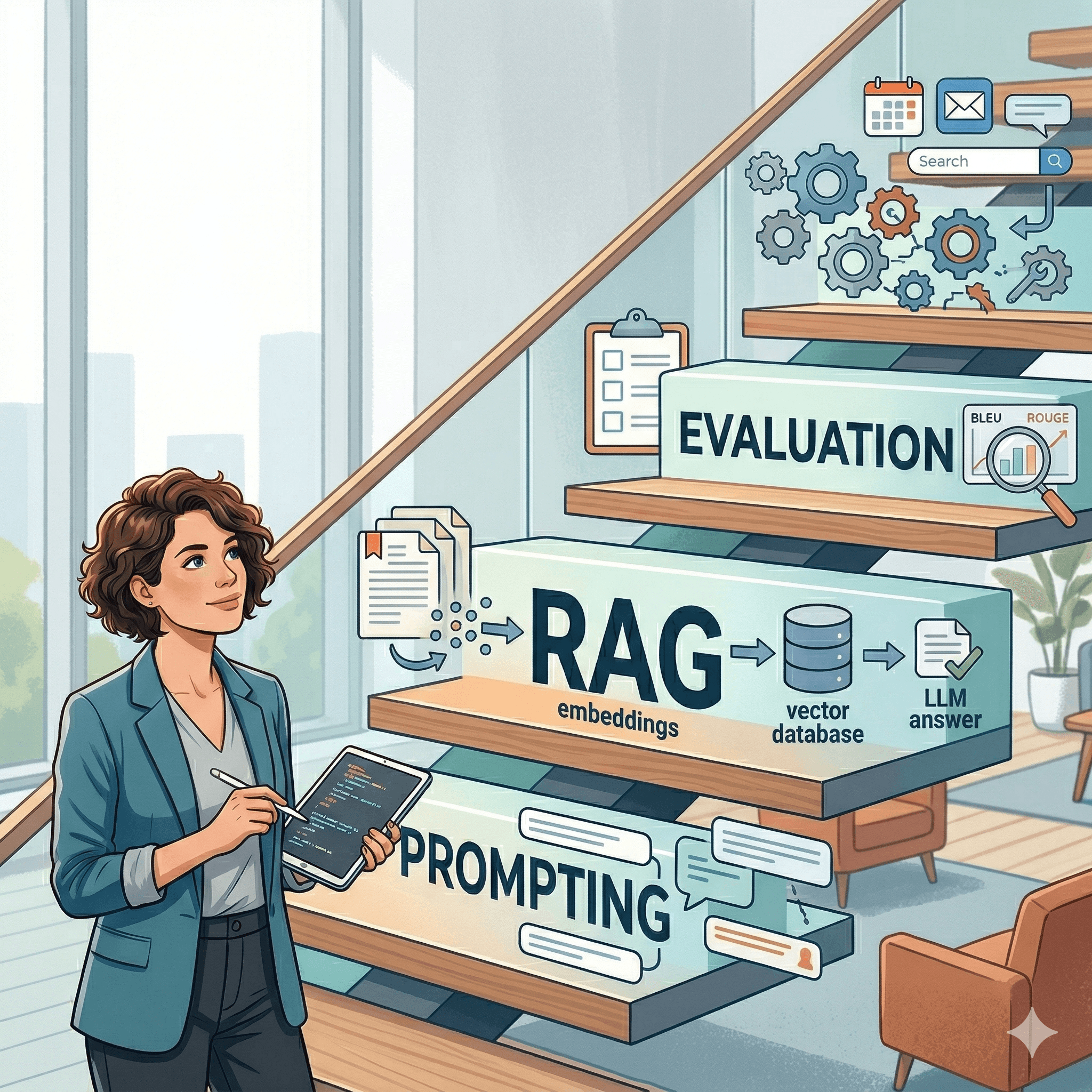



Do You Still Need to Learn SQL in the Age of AI?
If AI can write SQL queries for you, do you still need to learn it in 2026?
It's a totally fair question, and one pretty much everyone who wants to work in data is asking right now. If you're not in the weeds actually doing the work, it's a really hard question to understand.
I've been using SQL on the job pretty much every day for over a decade. These days, I use AI every day too.
I'll try to help you understand the nuance, break down the reality vs the hype, and talk about the key things you should focus on if you want to win in the age of AI.
Let's get into it.
Is SQL still relevant in 2026?
When someone says “Is SQL still relevant?”, they usually mean one of these:
“Can I get a data job without knowing SQL?”
“Will AI replace the need for SQL skills before I’m done learning?”
“Is SQL still worth my time?”
If you’re brand new or early career, the honest answer is:
Yes, you still need to learn SQL.
Not because you’ll be hand-writing every query forever.
But because understanding SQL and relational databases is how you think clearly about data structures, validate results, maintain stakeholder trust, and learn how to leverage AI correctly.
AI has changed the SQL workflow already, and will continue to do so in the future.
It doesn’t remove the need for the skill.
SQL is still one of the highest ROI skills you can learn.
What SQL skills does AI actually replace?
And where are your SQL skills still important?
AI is great at:
drafting a SQL query from a plain-English request
(personally I use my microphone and transcription. My prompts are usually pretty long, "rambling" even)reminding you of SQL syntax and troubleshooting errors in your code
(I always used to Google/StackOverflow for syntax and errors. Now I use AI instead. It's great here)generating a starting point faster than you can type
(especially for longer queries. For really short queries, I wouldn't use AI. We are still faster)
offering alternatives to your approach
("try using a CTE vs a subquery here", "use a window function", etc.)
AI is not great at:
catching mistakes that still return “reasonable” numbers, and are confidently wrong
(being able to navigate this may be the #1 reason you still need SQL/data skills)knowing what your tables and columns actually represent
understanding nuances in your data that require true domain expertise and business understanding
knowing what levers your company is trying to pull
The real risk here isn’t “AI writes bad SQL code.”
The real risk is that it misses the context, misunderstands the data structure, doesn't understand the nuances, so the AI writes SQL that runs, returns results, but is wrong.
And if you can’t spot the difference between accurate and confidently wrong, then you’ll be the one shipping the wrong answer to your stakeholders.
SQL is still the language of data access
A TON of business data still lives in:
relational databases
cloud data warehouses
tools built on top of SQL (BI tools, transformation layers, metrics layers)
Even when you don’t see SQL, it’s often still under the hood.
SQL is the common language across:
analysts
analytics engineers
data scientists
BI developers
stakeholders who want answers now
If you don't know how to use SQL? Well, you're stuck begging for help… waiting for someone to produce that nice clean data set you can analyze. Don't be this person.
When you know SQL, you’re not blocked by lack of access. You can self serve, getting your hands on the data and diving into projects. This is where you want to be sitting.
Think about it… if a company was choosing between two Analyst candidates… one begging for data and fully dependent, and the other fully self-reliant and ready to make an impact, who do you think they are going to choose?
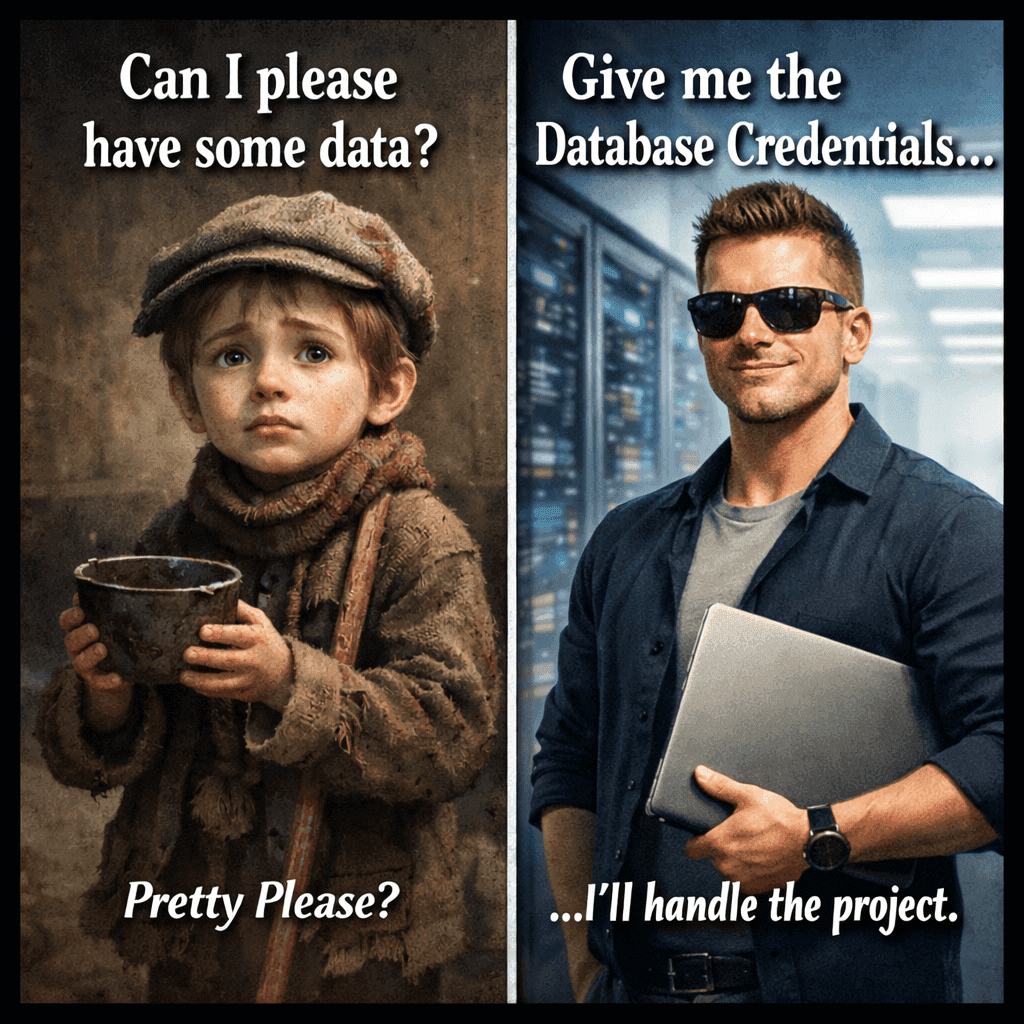
The biggest unlock for my career was moving from "can I please have some data?" to being self-serve and fully useful in any organization. An understanding of SQL and relational databases is what does that for your career (with some business acumen and communication skills too, of course).
When you know SQL…
You can get access to the data.
You can ask better questions.
You can check outputs for accuracy.
You can leverage AI to its full potential.
That’s why SQL is still relevant in 2026.
The most dangerous part: wrong SQL looks right
We touched on this before, and I'll go deeper because it's so important.
This is the part beginners don’t hear enough. And you really can't fully understand it unless you are in the weeds doing the work and seeing the issues real-time.
A lot of “bad SQL” written by AI doesn’t throw an error message. It still runs. It might still produce a reasonable looking output. And it will definitely present the SQL query confidently. That's for sure.
But something might be wrong. Do you know enough to figure that out?
If you don't know how to check the work, then that's your fault, and you're on the hook for any bad decisions that get made because of YOUR mistake. That's right. If you use AI and it's wrong, you own the failure.
Here's where AI often goes wrong when it comes to SQL…
1) Join problems
many-to-many joins that double count by accident
joining on the wrong key
joining at the wrong level
left join vs inner join issues
2) Filter problems
filtering after a join instead of before
filtering the wrong table
forgetting that NULL behaves differently than you expect
3) Aggregation problems
grouping at the wrong level
mixing row-level and summary-level logic
counting users instead of counting events (or vice versa)
AI can generate all of these mistakes confidently.
Your job is to catch them.
That’s why learning SQL is still worth it.
Not for writing the code.
For thinking. For validating. For owning the output.
The SQL you actually need to learn (not everything)
You do not need to memorize every keyword in week one.
If you’re starting from zero, focus on the fundamentals first.
Step 1: The Big 6 of SQL
SELECT
FROM
WHERE
GROUP BY
HAVING
ORDER BY
If you can read and write these comfortably, you’re already tackling a huge part of what an Analyst would do with data on the job.
Step 2: SQL Aggregate Functions
You'll use these with GROUP BY to start slicing and dicing the data and creating basic reports. Think of this like using a Pivot Table in Excel.
COUNT, SUM, AVG, MIN, MAX (if you know Excel already, these are easy)
DISTINCT (and when you do and don't want to use it)
Step 3: Database Structure & SQL Joins
Next you'll want to understand data structure, how tables join together, and practice querying from two tables with INNER and LEFT JOIN. This is where a ton of power is unlocked with SQL. It also trips some folks up. So go slow here.
Primary and Foreign Key Mapping, Cardinality, Normalization, Data Types - be familiar with these concepts
INNER vs LEFT JOIN (don't worry about RIGHT JOIN. No one uses it)
Step 4: The SQL “career accelerators”
These are super useful, but don't stress over them on Day 1. At this point, just being aware
CTEs & Temporary Tables (readability and structure for complex queries)
Window Functions (rank, lead, lag, partitions - lets you do serious analysis!)
That’s it.
You’re not trying to become a database administrator.
You’re trying to become a clear thinker who can pull accurate answers.
If you can do that, you'll unlock the full potential of AI and speed up your process, enabling you to add more value to any organization.
Can You Use AI to Learn SQL Faster?
AI is amazing for learning, if you use it like a coach.
Here are prompts you can use with AI when you're writing your own code:
Ask for help with error messages
"I'm getting this error message: [error message]
Here is the query below. Can you explain the error and re-write it correctly for me?
[paste SQL query here]"
Ask for help with specific syntax
"I'm getting to do [XYZ], I've got the following code, but can't quite figure out the right syntax on line 4. Can you write it for me and explain what you did?"
Ask for guidance on your approach
"I want to do [XYZ]. I've got these two tables [descriptions]. Can you give me a quick outline for how I should approach this problem? I'll write the query myself"
And here are prompts you can use when you want the AI to write the code for you:
Ask for explanations, not just outputs
“Write the SQL and explain the tradeoffs and key decisions. Tell me about each clause as if I'm new to SQL”
Ask it to challenge itself
“Give me 3 ways this query could be wrong. Tell me how you would double check each of the potential issues”
Ask for alternatives
“Show me 2 other approaches and discuss the tradeoffs.”
(note: when you do this, you can use the alternate methods to validate the ouput. If they don't match, you know something is wrong)
Ask it to improve clarity
“Rewrite this with simpler code and add human readable comments.”
Can You Use AI to write SQL on the job?
Totally. I do.
Here’s the general rule:
If AI gives you the SQL code, your job is to verify it and ensure accuracy.
If you can’t verify it, you can't trust it.
And in analytics, if you can't trust it, you can't use it.
You own the results. Saying "oops…the AI got it wrong" means "you got it wrong". Don't put yourself in this position.
Why SQL is still a key data career skill
If you want to land your first role (or level up early career), SQL is still one of the fastest ways to stand out.
Because it compounds.
SQL helps you:
answer questions without waiting on someone else
explore data on your own
validate dashboards instead of trusting them blindly
communicate with technical teams
build credibility fast
And the real “rare and valuable” combo right now looks like this:
SQL + business thinking + communication + AI fluency
Not “AI instead of SQL.”
AI plus fundamentals. The same fundamentals that have always been there.
That’s the move.
If you can:
understand the business question
pull the right data
sanity check the result
explain it clearly
use AI to speed up the boring parts
communicate insights and potential impact
You’re going to be hard to ignore.
So… do you still need to learn SQL?
If you’re brand new or trying to break in:
Yes. Learn SQL.
And learn it in a way that helps you think, not just copy syntax.
If you’re early career:
Sharpen SQL skills.
Then lean into AI to move faster, explore more, and write cleaner code.
AI doesn’t remove the need for SQL. It raises the bar.
Because now the expectation is:
You can get a query in seconds.
So the differentiator is whether the answer is correct, useful, and trusted.
If you want a simple challenge, try this:
Next time you ask AI for a query, don’t run it right away.
First ask:
“What assumptions am I making about this data?”
That’s the skill that keeps you employed.


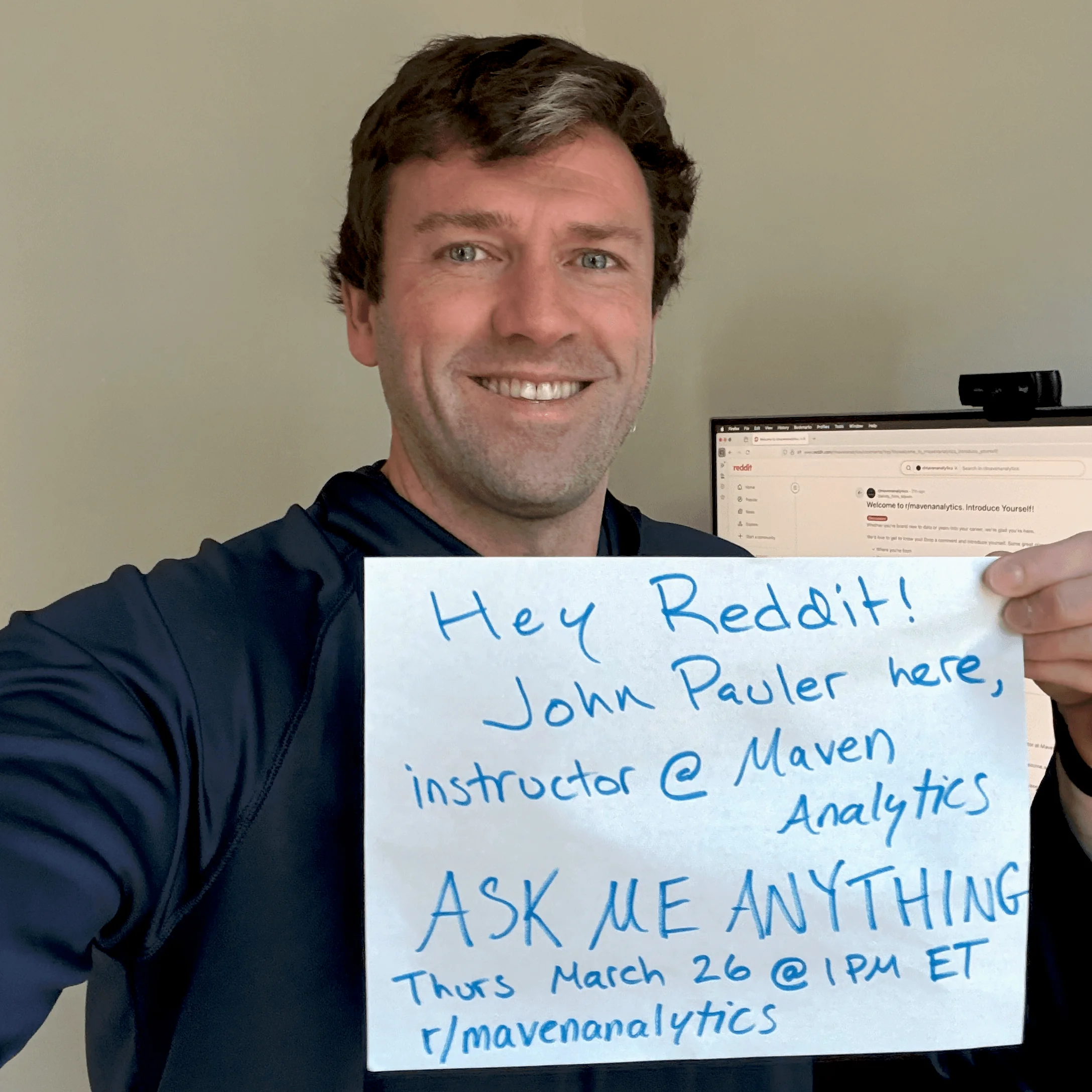
John Pauler
Partner & CRO
John brings over 15 years of business intelligence experience to the Maven team, having worked with companies ranging from Fortune 500 to early-stage startups. As a MySQL expert, he has played leadership roles across analytics, marketing, SaaS and product teams.