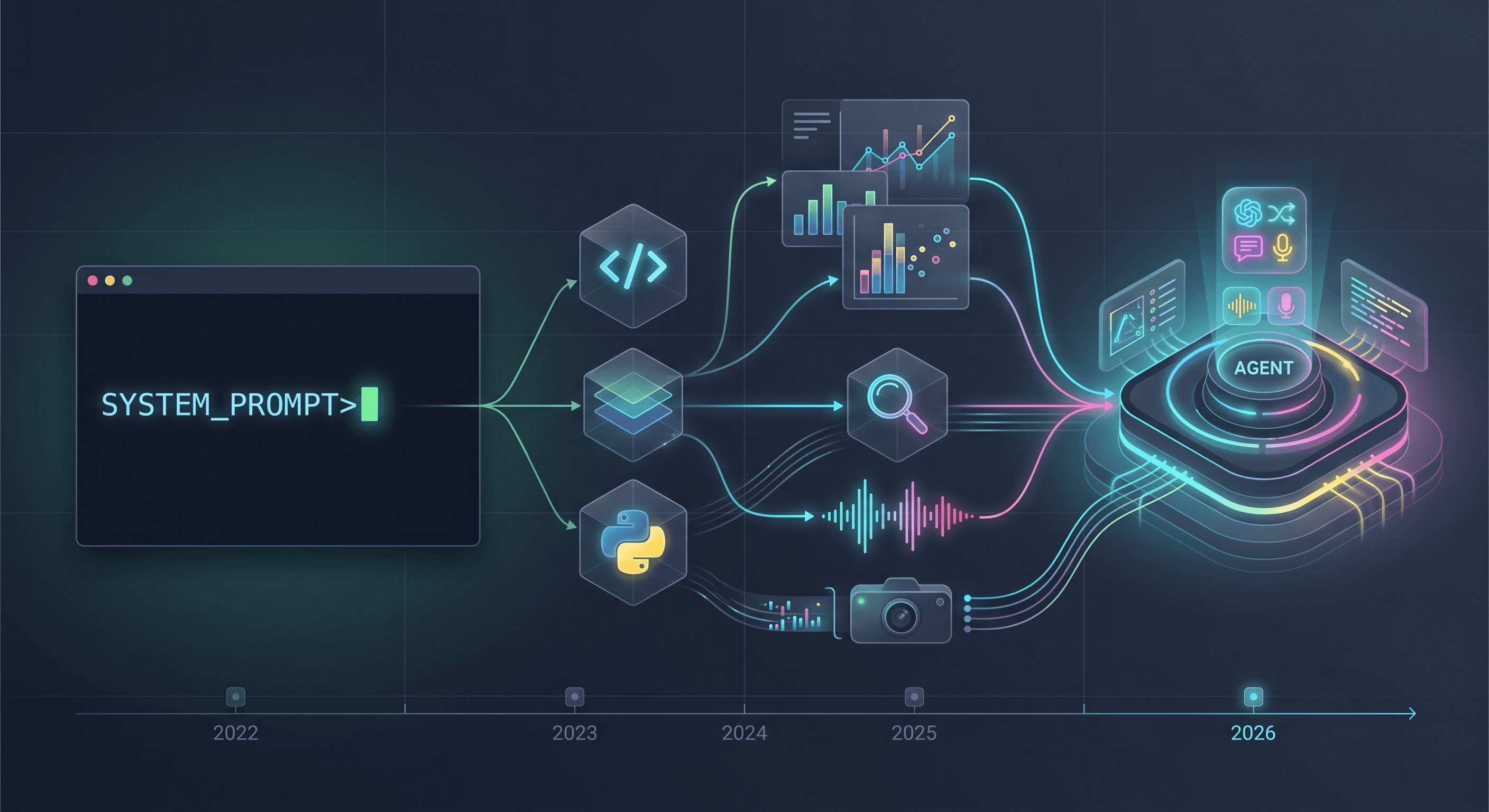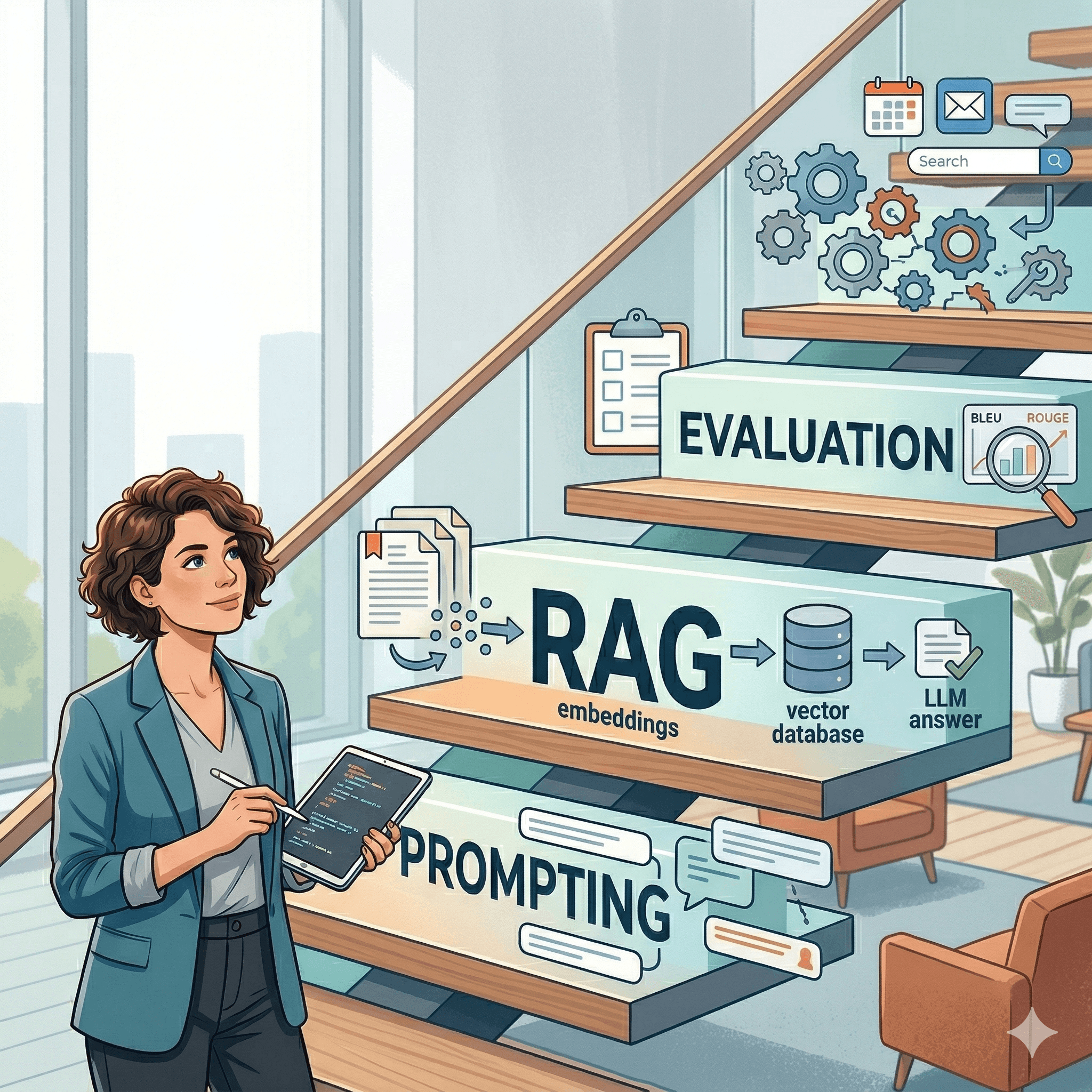



AI has been changing how data analysts work, from assisting with writing SQL queries to generating reports and presentations. The analysts using these tools every day will tell you that AI helps them move faster and generate new ideas, but also creates more opportunities for debugging and validation. Instead of replacing analysts, AI is helping by automating repetitive tasks and accelerating exploration and communication.
As AI capabilities improve, the analyst role is evolving from more technical execution toward higher-value analytical thinking, validation, and communication. Here, we’ll take a look at how different aspects of the analyst role are changing.
The Analyst Workflow Is Evolving Fast
The traditional analyst workflow was highly manual. Analysts spent large amounts of time writing SQL queries from scratch (or searching through repositories of old queries to avoid rewriting them), cleaning inconsistent data, formatting reports, documenting findings, and building dashboards. Much of the work involved operational overhead rather than actual analysis.
Today, AI-assisted workflows are significantly accelerating many of these tasks.
An analyst can now describe a business question in natural language and receive a draft SQL query within seconds if the AI has the proper schema context. AI tools can help identify missing values, explain code, summarize datasets, generate documentation, and even suggest visualizations for exploratory analysis.
There have been tools for years that help analysts identify missing values or inconsistent formats, but AI not only identifies the issue, it can also generate the code needed to solve it or automate parts of the cleaning process directly. Documentation generation is also a major win for organizations where documentation has historically been an afterthought.
This does not mean the analytical process disappears. Instead, the workflow becomes more iterative and collaborative. Analysts increasingly act as reviewers, editors, and decision-makers rather than manually producing every component from scratch.
Analysts still need strong technical and business skills, including a deep understanding of the data they are working with and the underlying business problem, but AI reduces friction throughout the workflow.
Where AI Helps Analysts Most
Writing SQL
SQL generation is one of the most common uses of AI for analysts. Tools like ChatGPT and Copilot can quickly generate SQL from natural language prompts.
For example, an analyst might ask:
“Write a SQL query using the user_activity table that calculates monthly active users by region using the user_id, activity_date, and region columns.”
AI can often produce a usable first draft immediately, reducing time spent on repetitive syntax and query writing.
AI is also useful for:
Explaining complex SQL
Converting between SQL dialects
Debugging queries
Optimizing joins and aggregations
Generating window functions and CTEs
This allows analysts to focus more on analytical reasoning rather than memorizing syntax.
Data Cleaning
Data cleaning is frequently one of the most time-consuming parts of analytics work. Traditional profiling libraries have long helped analysts identify missing values, inconsistencies, and formatting issues, but AI systems make the process far more interactive and generative. AI can suggest transformations, explain data quality problems, generate cleaning scripts, and help analysts reason through different approaches.
Analysts can use AI to:
Standardize column names
Identify null handling strategies
Generate Python or SQL cleaning logic
Detect potential anomalies
Explain transformation pipelines
Earlier tools primarily showed analysts what needed to be fixed. AI tools can now help accelerate the actual cleaning and transformation work itself.
Exploratory Analysis
AI is increasingly helping analysts during exploratory data analysis (EDA).
Modern tools can:
Summarize datasets
Identify trends
Suggest visualizations
Detect correlations
Flag outliers
Recommend questions to investigate further
Instead of manually exploring every dimension of a dataset, analysts can use AI to accelerate the discovery process and uncover areas worth deeper investigation.
Documentation
Documentation is another area where AI provides immediate value.
Analysts can use AI to:
Explain SQL queries
Summarize dashboards
Generate metric definitions
Draft technical documentation
Create project summaries
This reduces the burden of maintaining documentation while improving knowledge sharing across teams.
Presentation Drafting
Many analysts spend significant time translating findings into stakeholder-friendly communication.
AI tools can help draft:
Executive summaries
Presentation outlines
Slide content
Dashboard descriptions
Business recommendations
Analysts still need to tailor messaging for the audience, ensure the narrative is cohesive, and verify that key business context is included, but AI can help accelerate the first draft and reduce blank-page friction.
AI Makes Analysts Faster, Not Obsolete
One of the biggest misconceptions about AI in analytics is that it will eliminate the need for analysts entirely.
In reality, AI is primarily accelerating execution.
The most valuable parts of analytics work still depend heavily on human judgment:
Framing the right business questions
Validating assumptions
Identifying misleading conclusions
Communicating insights clearly
Understanding organizational context
Helping stakeholders make decisions under uncertainty
AI can generate queries and charts, but it cannot fully understand the political, operational, or strategic context surrounding a business decision.
For example, an AI-generated analysis may technically answer a question while completely missing the underlying business problem. Human analysts are still responsible for interpreting results, challenging assumptions, and ensuring that conclusions are meaningful and actionable.
There is also an important reality in analytics work: organizations are never finished asking questions. As analysis becomes faster and more accessible with AI, companies often increase the number of questions they want answered rather than reducing analytical work altogether.
The analyst role is not disappearing. It is shifting toward higher-level reasoning, validation, communication, and business decision support.
The New Analyst Skill Stack
The modern analytics career increasingly combines technical foundations with AI fluency and strong communication skills.
Data Foundations
The core analytical skills are still essential:
SQL
Spreadsheets
Statistics
Data modeling
Data visualization
Business intelligence tools
Critical thinking
AI tools are most effective when used by people who already understand the fundamentals.
AI Fluency
Modern analysts increasingly need to understand how to work effectively with AI systems.
This includes:
Prompt engineering
Validating AI outputs
Selecting appropriate AI tools
Understanding AI limitations
Integrating AI into workflows
Using AI-assisted coding and analytics tools
Communication
As AI automates more technical execution, communication becomes even more valuable.
Analysts who can…
Explain findings clearly
Influence stakeholders
Connect analysis to business outcomes
Tell compelling data stories
Simplify complex concepts
…will continue to stand out.
The emerging analyst formula increasingly looks like this:
Data Foundations + AI Fluency + Communication = Modern Analytics Career
The Risks of AI-Assisted Analysis
AI tools are powerful, but they also introduce new risks.
Hallucinations
AI systems sometimes generate incorrect information confidently. This can include:
SQL queries with errors
Fabricated metrics
Incorrect statistical explanations
Nonexistent functions or syntax
In some cases, the output may even appear syntactically correct while still producing logically incorrect results. Analysts must verify outputs rather than assuming correctness.
Wrong Assumptions
AI often lacks business context. A generated query or analysis may make assumptions that are technically plausible but operationally incorrect.
For example:
Misunderstanding business definitions
Applying incorrect aggregation logic
Ignoring edge cases
Without careful review, these mistakes can lead to flawed conclusions.
Misleading Visualizations
AI-generated charts and summaries can unintentionally oversimplify or misrepresent data.
Analysts still need to evaluate:
Chart appropriateness
Scale choices
Sampling issues
Statistical validity
Narrative framing
Visualization quality still depends heavily on human judgment.
Overtrust
One of the biggest dangers is overtrusting AI-generated outputs simply because they appear polished or authoritative.
AI can accelerate work dramatically, but speed does not guarantee accuracy.
Strong analysts maintain skepticism and treat AI as an assistant rather than a replacement for analytical thinking. Analysts still need to “drive” the analysis, while AI may suggest additional ways to explore the data that still require validation and business context.
How Analysts Should Adapt
The analysts who thrive in the AI era will focus on combining strong fundamentals with AI leverage.
Learn AI Tools
Analysts should become comfortable using tools like:
ChatGPT
Claude
Microsoft Copilot
Gemini
AI-enabled BI platforms
Understanding how these systems assist analytical workflows is becoming increasingly important.
Analysts do not need to master every AI tool on the market, but it is helpful to experiment with multiple tools, such as Claude and ChatGPT, to understand where each performs well.
Analysts should also learn the AI capabilities embedded within the platforms already used by their organization.
Strengthen Fundamentals
AI does not eliminate the need for technical knowledge.
Strong SQL, statistics, data modeling, and analytical reasoning remain essential for validating outputs and solving real business problems.
Improve Communication
As technical execution becomes easier, communication becomes more differentiating.
Analysts should invest in:
Presentation skills
Storytelling
Stakeholder communication
Writing
Business framing
The ability to explain insights clearly is becoming increasingly valuable, and AI can be extremely helpful in improving communication. Before sharing information with an AI system, analysts should first make sure their organization allows that data to be shared and understand the company’s AI usage policies.
AI can help analysts refine stakeholder emails, improve executive summaries, strengthen presentations, and identify areas where explanations may be unclear.
Asking AI how a summary could be improved or whether something important may be missing can both improve the current analysis and help analysts become stronger communicators over time.
Focus on Business Thinking
The highest-value analysts are not simply producing dashboards. They are helping organizations make better decisions.
This means understanding:
Business goals
Operational tradeoffs
Customer behavior
Strategic priorities
Organizational context
AI can accelerate analysis, but business judgment remains deeply human.
Conclusion
AI is transforming the analytics workflow by accelerating repetitive tasks and reducing operational friction. Analysts can now generate SQL queries, clean data, draft documentation, and create presentations faster than ever before.
But the most valuable parts of analytics still require human judgment.
The analysts who succeed in the AI era will combine strong technical foundations with AI fluency, communication skills, and business judgment. Rather than replacing analysts, AI is changing how great analysts spend their time.


Kristen Kehrer
Data Science & AI Expert
I love building coding demos and educating others around topics in AI and machine learning. This past year I've leveraged computer vision to build things like a school bus detector that I use during the school year to get my kids on the bus. I've most recently been playing with semantic video search, vector databases, and building simple chatbots using OpenAI and LangChain.
Frequently Asked Questions
Will AI replace data analysts?
AI will automate repetitive tasks, but analysts who can think critically, validate results, and communicate insights effectively will remain a business necessity.
How do analysts use ChatGPT?
Analysts use ChatGPT for SQL generation, documentation, brainstorming, debugging, exploratory analysis, and drafting summaries or presentations.
Do analysts still need SQL if AI can write queries?
Yes. Analysts still need to validate query logic, optimize performance, interpret results, and ensure that business definitions are applied correctly. Depending on company policies and tooling, AI systems may not even have access to your schema, tables, or column names.
What AI tools should data analysts learn?
Useful starting points include ChatGPT, Microsoft Copilot, Claude, Gemini, and AI-enabled business intelligence platforms. Analysts do not need to master every AI tool available. It is often more effective to start with one tool and learn how to integrate it into existing workflows.
What skills matter most for analysts in the AI era?
Strong data foundations, critical thinking, communication skills, business understanding, and AI fluency are all becoming increasingly important. The core skills that have always mattered in analytics still matter today, analysts are simply applying them alongside AI systems in new ways.